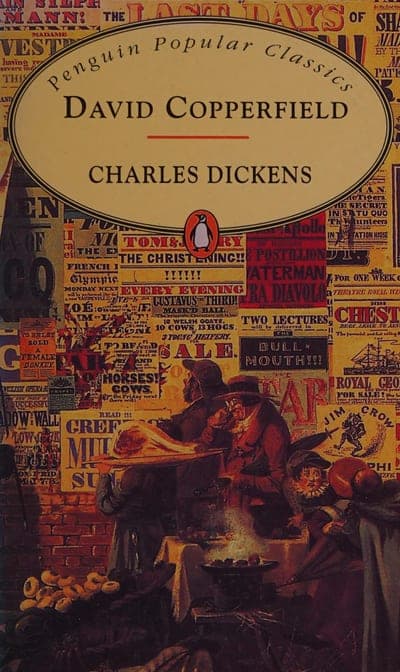
- First published
- 1850
- Author
- Charles Dickens
- Publisher
- Bradbury & Evans
- This copy
- Penguin Popular Classics
David Copperfield
Charles Dickens · 1850
David Copperfield is a small boy when his widowed mother remarries a man named Murdstone, who moves in with his sister and starts running the house on "firmness." When David bites Murdstone's hand in his own defense, he's shipped off to a brutal boarding school and then, after his mother dies, to child labor — washing bottles at a London warehouse, Murdstone and Grinby's, that Dickens based on the blacking factory he worked in himself as a boy and told almost no one about.
David escapes on foot to Dover and his eccentric aunt Betsey Trotwood, who takes him in and renames him Trotwood Copperfield. The book runs a long second half of consequences: Uriah Heep works his way into control of the alcoholic Mr. Wickfield's affairs by grinding "umbleness" until Micawber exposes his fraud; David's charming friend Steerforth seduces and abandons Little Em'ly, and later drowns in the same storm that kills Ham, who dies trying to save him. David marries the pretty, impractical Dora Spenlow, who dies young after losing their baby, before he recognizes what he actually has in Agnes Wickfield, who marries him at the end.
It's Dickens's most autobiographical novel, and it reads like someone working something out rather than performing a plot. The honest reservation is Agnes: she's devoted and clear-eyed from her first appearance, and the book treats her as David's reward for growing up rather than giving her much interior life of her own.