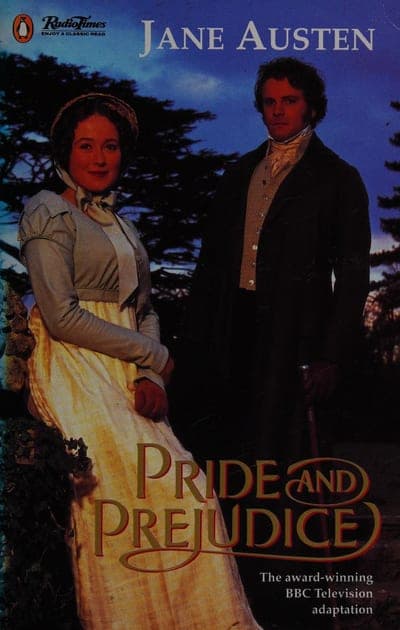
- First published
- 1813
- Author
- Jane Austen
- Publisher
- Thomas Egerton
- This copy
- A Penguin paperback tied to the 1995 BBC television adaptation, part of a 'RadioTimes — Enjoy a Classic Read' promotional series; the exact printing year is not stated on the cover and could not be confirmed.
Pride and Prejudice
Jane Austen · 1813
At a ball early in the book, Mr. Darcy refuses to dance with Elizabeth Bennet and, within her hearing, calls her not handsome enough to tempt him. She spends most of the novel disliking him for it, which is the joke: he is already becoming interested in exactly the wit that remark provoked.
The reversal runs through two specific documents. Darcy's first proposal, at Hunsford, is an insult wrapped as a compliment — he tells her he loves her despite her family's low connections — and Elizabeth refuses him, accusing him of separating her sister Jane from Bingley and mistreating Wickham. The letter he sends the next day corrects both charges: Wickham tried to elope with Darcy's fifteen-year-old sister for her money, and Darcy separated the couple because he believed Jane indifferent. Later, when Lydia runs off with Wickham with no plan to marry him, Darcy quietly pays Wickham's debts and buys him a commission to force the marriage through — and tells no one.
It's for readers who want the comedy of manners played completely straight, where the jokes are in the dialogue and the plot turns on money and reputation rather than misunderstanding alone. The honest reservation: the happy ending depends on Darcy's wealth solving problems the characters can't solve themselves, and Charlotte Lucas's marriage to the ridiculous Mr. Collins — for security, with open eyes — sits in the same book as a joke and as the novel's clearest acknowledgment of what marriage costs a woman without money.