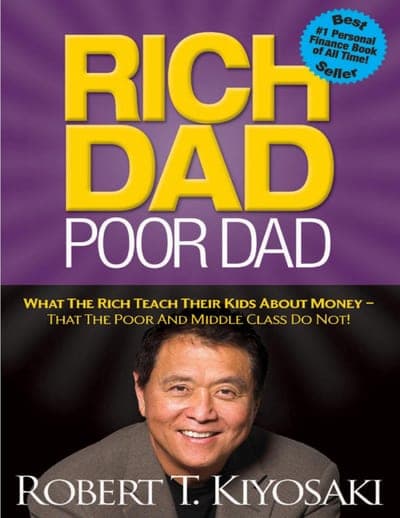
- First published
- 1997
- Author
- Robert T. Kiyosaki
- Publisher
- Warner Books
- Pages
- 207
- This copy
- Warner Business Books, 2000 trade edition
Rich Dad, Poor Dad
What the Rich Teach Their Kids About Money -- That the Poor and Middle Class Do Not!
Robert T. Kiyosaki · 1997
Robert Kiyosaki tells his financial education as a story of two fathers: his own, a highly educated school administrator who worked hard and stayed short of money his whole life, and his best friend's father, a businessman who never finished the eighth grade and built real wealth. Kiyosaki calls the second man his rich dad and credits him with the lessons in this book.
The central distinction is assets versus liabilities, defined not by what a thing is but by which direction the cash moves: an asset puts money in your pocket, a liability takes it out, and a house you're paying a mortgage on is a liability by that definition even though most people call it an asset. Kiyosaki argues that the financially secure buy assets first and let those pay for the liabilities, while everyone else works for money instead of having money, or ownership of things that produce money, work for them.
It lands for readers who have never had the vocabulary of assets, liabilities, and cash flow explained to them plainly, and for whom that reframing is genuinely useful. The honest reservation is bigger than usual: for years Kiyosaki declined to identify his rich dad, and after the death of Hawaiian hotel developer Richard Kimi, Kimi was put forward as the man behind the story — which means the book's central figure spent decades unconfirmed, and critics including John T. Reed have argued parts of the book's specific advice are wrong.