- First published
- 2016
- Author
- Lisa Cron
- Publisher
- Ten Speed Press
- Pages
- 288
- This copy
- Ten Speed Press, 2016
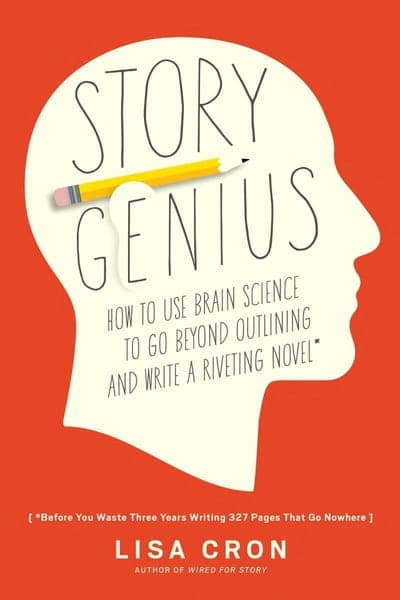
Story Genius
How to Use Brain Science to Go Beyond Outlining and Write a Riveting Novel
Lisa Cron · 2016
Lisa Cron opens with a warning built into her own subtitle: how to use brain science to write a novel, instead of spending three years finishing 327 pages that go nowhere. Her target is a specific and common failure — a book that's been fully outlined, scene by scene, and still doesn't work, because plotting the external events was never actually the job.
Her argument is that a story isn't what happens, it's what those events mean to one particular person, and that meaning has to be set before the first scene gets written — by a 'misbelief,' a wrong conclusion the protagonist drew from a specific wound in their past, that quietly runs what they want and what they're afraid of. Cron has the writer work out that backstory first — who this person is, what happened to them, what they wrongly came to believe because of it — and only then build each scene as a response to it: what the protagonist thinks this moment means, and where that reading is wrong. It's a direct argument against writing from a map of events and hoping a real character turns up to walk it.
It lands for writers who've already tried outlining and watched it fail on them — this isn't a beginner's introduction to craft. The reservation: the method front-loads a lot of work before a single scene gets drafted, and writers who work by discovery, finding the character on the page rather than on a worksheet, will find its whole premise runs against how they work.