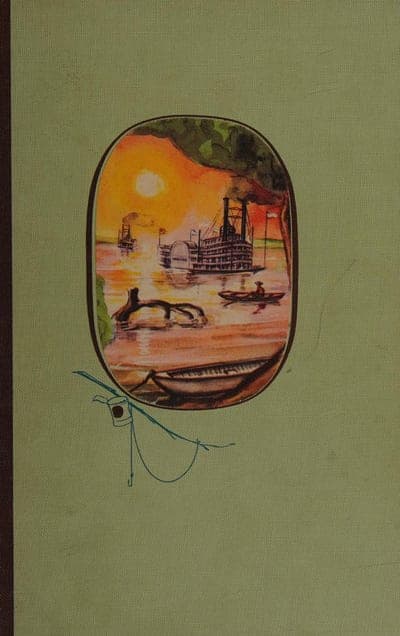
- First published
- 1884
- Author
- Mark Twain
- Publisher
- Charles L. Webster and Company
- This copy
- An unidentified illustrated cloth-bound reprint — no title, author, or publisher mark visible on this face
The Adventures of Huckleberry Finn
Mark Twain · 1884
Huck Finn fakes his own death to escape his drunk, abusive father and ends up on a raft down the Mississippi with Jim, a man escaping slavery. Most of the book is the two of them and the river, with a pair of con men, the King and the Duke, working towns along the bank in between.
The moral center of the book is a decision, not a speech: Huck, having been taught his whole life that helping an enslaved man escape is a sin, decides to tear up the letter that would turn Jim in and thinks "all right, then, I'll go to hell." The last section changes register. At the Phelps farm, Tom Sawyer — who already knows, and doesn't tell anyone, that Jim was freed months earlier in Miss Watson's will — talks Huck into an elaborate, storybook "evasion" to rescue a man who is already free.
It's for readers who want Twain's vernacular voice and the specific weight of that river-raft stretch. The ending is genuinely disputed rather than just a matter of taste: Hemingway told readers to stop before the Phelps farm and called the rest "just cheating," while Ralph Ellison argued the section is structurally and morally necessary to the book. I don't think there's a settled answer, and the disagreement is worth knowing going in.