- First published
- 2012
- Author
- Timothy J. Keller
- Publisher
- 10Publishing
- This copy
- 10Publishing, 2012
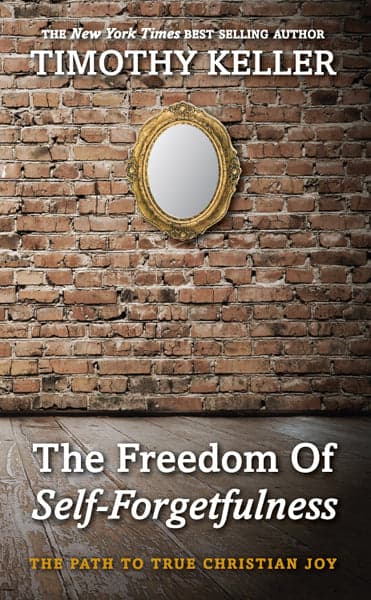
The Freedom of Self-Forgetfulness
The Path to True Christian Joy
Timothy J. Keller · 2012
Paul is writing into a church that has split into fan clubs for rival teachers, and he tells the Corinthians he cares very little what they think of him. Then he goes one step further and says he does not judge himself either. Keller takes that second clause and spends the whole book on it. It is under fifty pages, and it reads as what it is, a talk written down.
The diagnosis comes first, in four words: the natural human ego is empty, painful, busy and fragile. There is nothing at its centre. It aches the way a part of the body aches when something has gone wrong with it. It is busy because it is always working to fill the emptiness, and fragile because anything blown up that far is one moment from going flat. Against it Keller sets gospel-humility, not thinking less of oneself but thinking of oneself less. He borrows Lewis's observation that a genuinely humble person does not strike anyone as humble, only as interested in whoever is in front of them. Underneath is a courtroom: the ordinary self performs in order to earn a verdict, and the Christian self is handed the verdict first and performs out of it.
It lands for a reader who already suspects that managing their own self-esteem is the problem and wants one short sitting spent naming it precisely. The reservation is the length and what the length costs. Keller states the psychology rather than arguing for it, and the whole case rests on the verdict being real, so there is nothing here for a reader who does not grant that. The same argument is worked out at proper length in his longer books.