- First published
- 1937
- Author
- J.R.R. Tolkien
- Publisher
- George Allen & Unwin
- This copy
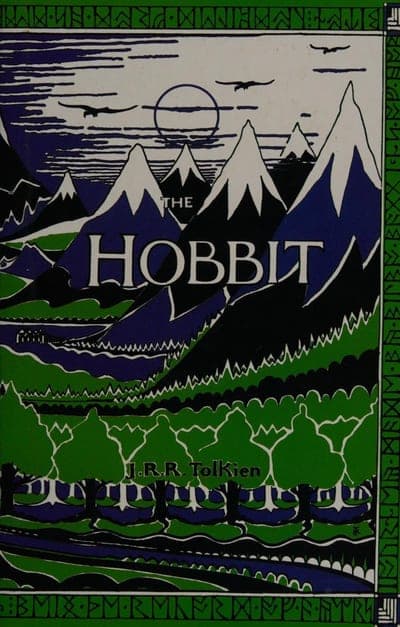
- Modern reissue using Tolkien's own original 1937 dust-jacket design (mountains, rune border); specific publisher/printing not pinned down
The Hobbit
J.R.R. Tolkien · 1937
Bilbo Baggins is a hobbit who likes his pantry, his pipe, and never being asked to do anything unexpected, and one afternoon thirteen dwarves and a wizard turn up on his doorstep expecting tea, then a burglar. He goes east with them anyway, toward a mountain with a dragon sitting on top of it, and spends most of the book badly out of his depth.
The scene everyone remembers happens alone, underground: lost in the tunnels beneath the Misty Mountains, Bilbo meets a starving creature named Gollum and the two of them play a riddle game for Bilbo's life, with a small gold ring he's just pocketed deciding how it ends. Tolkien wrote it as a children's story and it reads like one for a long stretch — short chapters, a narrator who talks directly to the reader, songs breaking up the walking — until Smaug the dragon and the battle that follows his death, which are not soft at all.
It's a children's book about a middle-aged man leaving his house and being frightened and homesick the whole way, which is a strange thing to hand a child and exactly why it holds up: the story never talks Bilbo out of his fear, it just lets him have it and keep walking anyway. The honest reservation is the tonal shift in the last third — bedtime story gives way to siege, battle, and real grief over Thorin's death, and the book never quite returns to the register it started in.