- First published
- 2005
- Author
- Alan Jacobs
- Publisher
- HarperSanFrancisco
- Pages
- 342
- This copy
- HarperSanFrancisco paperback (year not confirmed)
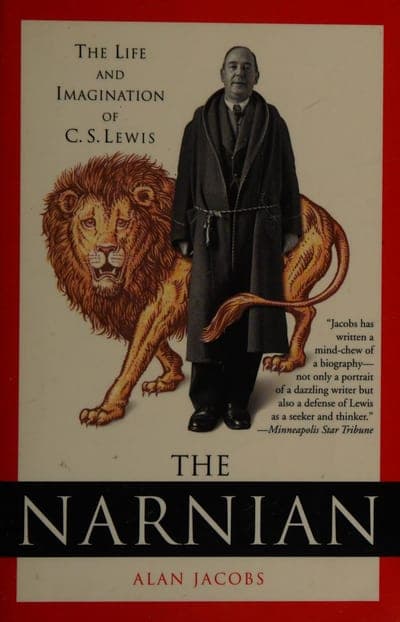
The Narnian
The Life and Imagination of C. S. Lewis
Alan Jacobs · 2005
Twelve of this book's thirteen chapter titles are quotations; the last is plainly "The future of Narnia" — which tells you how late Narnia arrives in the life it describes. Jacobs begins in Ireland with two boys, Lewis and his brother Warnie, inventing countries between them; then the trenches of the First World War, then Oxford, then decades of argument in common rooms and at the pub, then a late and short marriage to Joy Davidman. The question underneath the whole thing is how a middle-aged bachelor don who lectured on medieval literature ended up writing stories for children.
The answer Jacobs gives is a quality rather than an event: a willingness to be enchanted, which Lewis kept long after most people lose it, and which his conversion did not manufacture so much as redirect. This is a biography of an imagination, so what Lewis read gets as much room as what happened to him — the northern myths, the medieval picture of the cosmos he taught for a living, the friendship with Tolkien and the rest of the Inklings. Jacobs is not writing a defence brief. One chapter is called "Nobody could put Lewis down."
It lands for someone who has read the Chronicles and wants the man behind them, or who wants a Lewis book that treats the fiction as the point rather than a footnote to the apologetics. The reservation is the flip side of the appeal: Narnia is the lens rather than the subject. Jacobs keeps returning to it to explain the life, and the closing chapter turns to the Chronicles' reception and their critics rather than to the stories themselves. Most of the book is a life, and a bookish life at that — a man reading, arguing and grieving, largely indoors. Anyone hoping for a book-by-book reading of the Chronicles will find a biography instead.