- First published
- 2011
- Author
- Alan Jacobs
- Publisher
- Oxford University Press
- This copy
- Oxford University Press, 2011
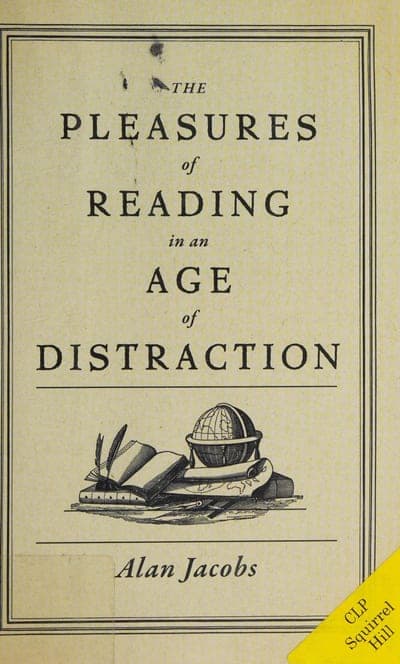
The Pleasures of Reading in an Age of Distraction
Alan Jacobs · 2011
The whole instruction fits in three words Jacobs borrows from Randall Jarrell: read at whim. It is aimed at a specific person — not someone who never reads, but someone who does read and frets about it, wondering whether they are doing it properly, with enough attention and enough discrimination. That anxiety, rather than any shortage of readers, is what the book takes as its problem.
What reading at whim means in practice is following the taste you actually have rather than a list of books you feel you ought to have read, and the argument is that it will carry a reader further than any improving list ever has. Around that sit chapters on the invention of silent reading, on reading responsively, on why rereading a book is not a waste of the years you have, and on reading from a screen — which he handles as a plain question about a tool rather than as an occasion for mourning.
It is short and it contains no method, which is either the point or the reason to leave it alone. Anyone who wants a system — how many books a year, in what order, annotated how — will close it holding nothing but permission. It also assumes a reader who already loves books and has only mislaid the habit; for someone who has never wanted to read, there is nothing here to start with. The pleasure of it is watching a very well-read man refuse to be prescriptive.