The argument under the season
Why We Keep It
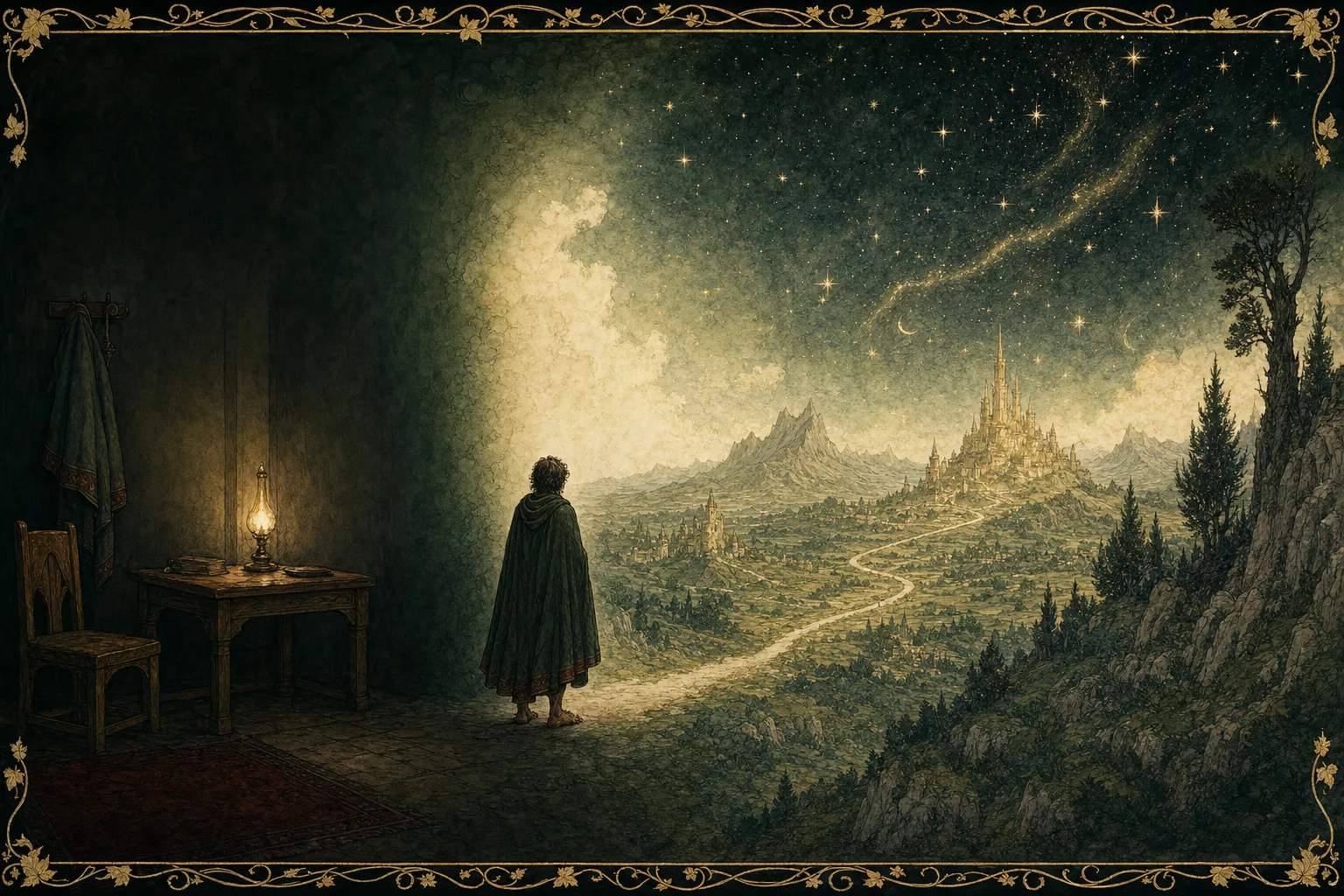
I grew up in Northern New York, where January and February were the dreariest part of the year. Christmas and Christmas vacation were over with that abrupt back-to-school let down, and spring was still a long way off.
So when I grew up, I added something to that part of the year. Between Christmastide and Valentine’s Day is a season in this family I dubbed Tolkientide. The real focus is on the magic and beauty of the created order of things — what to us is “normal” and “mundane” is, when considered deeply, amazing and kind of magical.
Three things put it there
One: the year got a shape
My wife and I found the church calendar — Advent, Christmastide, Lent, Easter — and it gave us patterned time, the way farm seasons once patterned the year on a Northern New York homestead. It made the year legible instead of flat. And once you can see the shape of a year, you can see the hole in it. Tolkientide fills the hole.
Two: the Silmarillion re-set the scale
I read The Hobbit at seven because my brother had just finished it. I read the trilogy several times. But it was the Silmarillion that had a tectonic effect, and it arrived at a hard point in my life, which is probably why. In it, the epic that the western world knows and loves is a few paragraphs. Reading it, I left this world for a while — and looked back at it from a long way off.
Three: it is a true myth
On a September night in 1931, Tolkien and Hugo Dyson walked Lewis up and down Addison’s Walk past three in the morning. Lewis said myths were lies, even though breathed through silver. Tolkien said no: the story of a dying and rising god shows up in every culture because it is the shape of the real thing — and then, at one datable moment, in one province, under a named governor, it happened. Myth became fact and did not stop being myth. Days later, Lewis was a Christian.
That is not Christianity softened into metaphor. It is the opposite, and the direction matters. If it is true, the pagan stories were never lies — they were rumours of home. And you are not somebody reading the story. You are a character inside it, in an ordinary week, doing ordinary work.
What “magic” means here
Not spells, and not a mood. The trouble with ordinary life is not that it is dull — it is that it is expected, and what you expect you stop seeing. Familiarity is the fog. Nothing gets added to the world during Tolkientide; the fog comes off it.
Which is why an hour of Planet Earth belongs on the same shelf as the Silmarillion, and why the book I would defend hardest is a cookbook — Robert Farrar Capon spending an hour looking at one onion and getting better theology out of it than most people get out of a library. The claim of this season is that the magic is already in the created order. Tolkientide is the annual maintenance on your ability to see it.
And then you come back
Tolkien would not let his heroes finish the story abroad. They come home and find home wrecked, and the last work of the book is unglamorous local repair by tired people. Any season of enchantment that does not put you back to work in your own town has failed. This one ends on February 13 and hands you over to the ordinary — and to one particular person across one particular table, who has been inhabiting the narrative space of a titan the entire time you were away.